




















Advanced Placement English Language and Composition is a class that every junior has the option to take, as long as they meet the grade requirements. In this class, students read, analyze, and write numerous forms of literature, using rhetorical principles. Not only does the course consist of learning how to analyze language, but it also informs students how various devices and words can add meaning to a text, along with how to create meaning when writing. In order to improve our writing and help us grow, we peer edit each other’s assignments to improve rough drafts. Ms. Stasiuk, the teacher for AP Lang, helps each of us individually, ensuring that we can improve to our greatest potential. There will be various points throughout the year when we are tasked to do group projects, partner work, or interactive assignments, like the memorial speech we have recently completed. This speech is a rhetorical analysis, one of the three main groups of writing we will focus on this year, the others being arguments and types of synthesis. Overall, the course requires critical thinking, as students are expected to add their own voice to writing through personal commentary, which relates to each point we choose to make. Ms. Stasiuk pushes each student to improve their work ethic, communication, and participation, as this is a college-level course that gives students the opportunity to gain college credit.
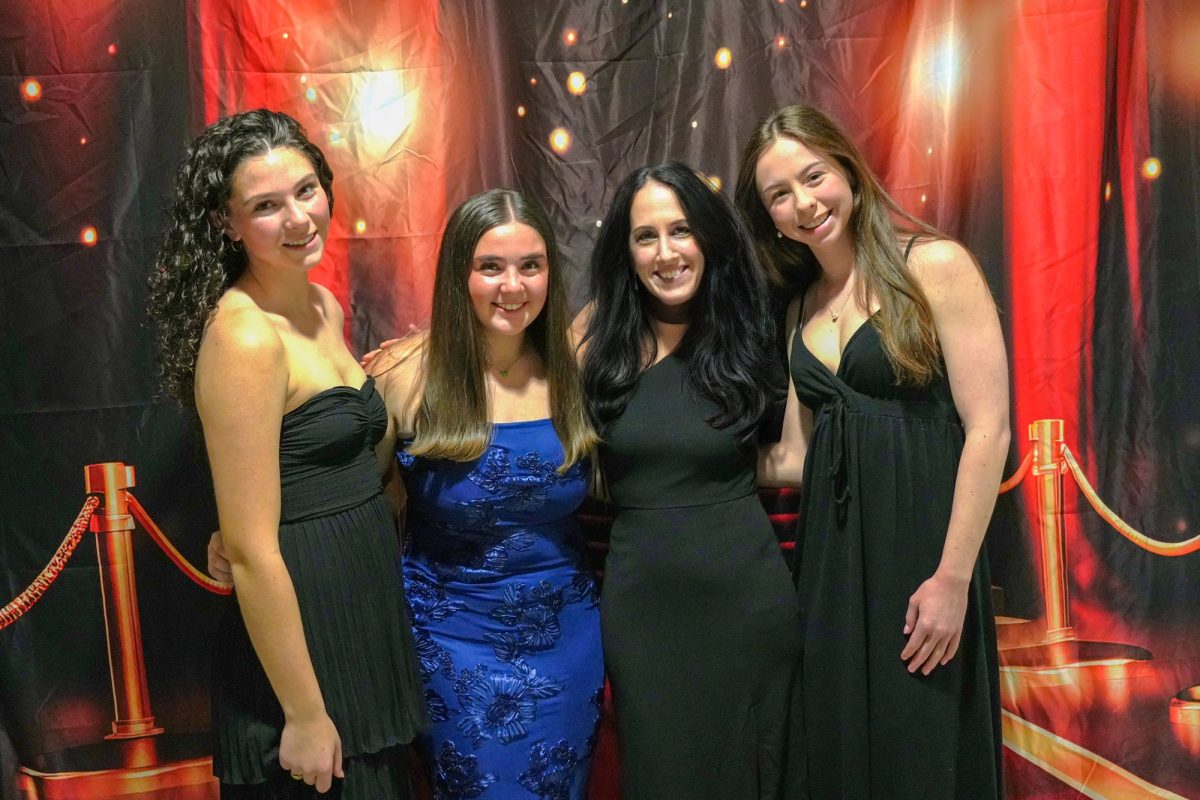
A group of hardworking AP and honors students, our team is made up of Leila Almeida, Heidi Rodrigues, Rowan Alegria, and Walter Ellis. The roles each of us played in this are as follows:
- Walter: Editor—He edited the grammar and overall structure of the essay once the main writing was done. His contributions enabled us to sound sophisticated and well-informed when presenting our writing.
- Leila and Heidi: Rhetoricians – They made the choices of what the essay would utilize for rhetorical devices and style. Their efforts allowed for the writing to be coherent and efficient in getting its points across.
- Rowan: Speaker – He delivered the speech on presentation day, being sure to use an appropriate tone and delivery style. His help allowed the group to stand and support him as he proudly showcased our work.
As individuals, we all worked together to contribute to the writing of the speech, collaborating to build sentences off of one another.
The work we wrote and presented was a memorial of the actor Heath Ledger, told from the perspective of his close friend, Mary-Kate Olsen, at the premiere of Ledger’s last film project. In it, Olsen addresses the whole crowd of friends and family, film appreciators, and Ledger fans gathered there. She broaches the subjects of substance abuse, pharmaceutical mix-ups, and the stress of the industry as a big-name actor. Mental health plays a large role in the job, and sometimes, actors lose sight of themselves. When delivering her memorial address, she intends for the audience to understand the importance of mental health, promote change in the medical field, and carry on the legacy that Ledger would have wanted, keeping his memory alive through his work. As a group, we felt that Ledger deserved a proper memorial to recognize the achievements of his life and the importance of his death. He was very young, and it came as a large culture shock to the many fans he had. As fans of his work ourselves, we felt it was appropriate to keep his memory alive and to spread awareness of the tragedy, even all these years later.
Without any further ado, here is our, or rather, Olsen’s, speech:
Good afternoon. Before we show the first screening of The Imaginarium of Doctor Parnassus, an amazing fantasy film, we would like to take a moment to appreciate the talent and enthusiastic personality of Heath Ledger. As many of you know, this was the last film he starred in before his tragic passing in January of ‘08.
For those of you who don’t know me, I am Mary-Kate Olsen, a fellow performer and great friend of his. In the time we spent together, he had such a remarkable impact on my life. When we met, we were both at a very low point in our lives, due in part to his excessive smoking problems and my own struggles with substance abuse. I remember the day he told me of his addiction and the sage advice that followed. He sat me down, looked me dead in the eyes, and grinned as he remarked,
“I’m not good at future planning. I don’t plan at all. I don’t know what I’m doing tomorrow. I don’t have a day planner, and I don’t have a diary. I completely live in the now, not in the past, not in the future.”
His optimism and persistence helped me to see the light in the darkness that kept him going during his challenging times. I know I’ve been dealing with plenty of grief in my life, as you all are as well. We’ve been left reeling after an event that can only be considered a momentous loss, a profound tragedy, an impactful deviation from his presence. While I feel such a great deal of pain at the thought of him no longer being here, I can only imagine how much sorrow his closest family and friends feel. It brings us all comfort to know his diverse fan base can and will remember him fondly and continue his good work as a compassionate and dedicated person.
On January 22, 2008, the legend, Heath Ledger, was found dead in his apartment bedroom in Manhattan, a bottle of sleeping pills beside him. As one of the first people called to the scene, it’s safe to say that I was a mess. This came as a surprise, since he never had issues with pills or any medications in the past, or at least none that I knew of. Though it’s been almost two years since this tragic day, we refuse to pardon the horrible mistakes that were made in the pharmaceutical industry. Due to their unfortunate mix-ups, Heath was mis-prescribed with a combination of deadly drugs that, when mixed with two Ambien, led to his untimely death. This is our sign to fix the pharmaceutical industry, as we lost a friend, we lost a father, we lost a son, and we lost an amazing actor and hero to many. I’m sure there are others out there who have, unfortunately, experienced such a tragedy due to similar circumstances. I, as well as many of the congregation here, feel for you, and therefore encourage you to embrace your grief and acknowledge that this will likely continue unless we make changes in the medical field. To those of you in the industry, I hope that we further our medical education and help pharmacist candidates become better equipped for the substantial role they accept to prevent harmful incidents such as these.
*PAUSE*
I am now being informed that I have five minutes before the premiere starts, but I cannot leave this room without giving Heath the proper credit for all the remarkable things that he has done.
I assume that most of you are familiar with his work, but you do not understand the depth of his dedication to it. In one of his most recent roles, he took on the challenge of embracing Christopher Nolan’s Joker, the nemesis of Batman. While many have played the role in past productions, Heath made sure to take it to a whole other level. He isolated himself for weeks on end and wrote a detailed diary to explore anything he could possibly embrace. Heath practiced his mannerisms and characteristics. He took his inspiration for movement from ventriloquist dummies, Francis Bacon’s artwork, and Malcolm McDowell’s Alex DeLarge from A Clockwork Orange. It is plainly evident for the viewers of The Dark Knight, released this past July, that Heath had an immense commitment to his character’s development and execution. However, tragically, he overcommitted to the role and, towards the end, was ostracized and distant, part of the catalyst for his overdose. His life was made up of his roles, and his roles took away his life.
I’ll leave you with this. As Heath always said, “If you’re just safe about the choices you make, you don’t grow.” Go forward, inspire action, and live as my best friend would want you to.
I hope you all enjoy the film that Heath and his coworkers put so much time into. Thank you.


